Why Businesses Need ERP
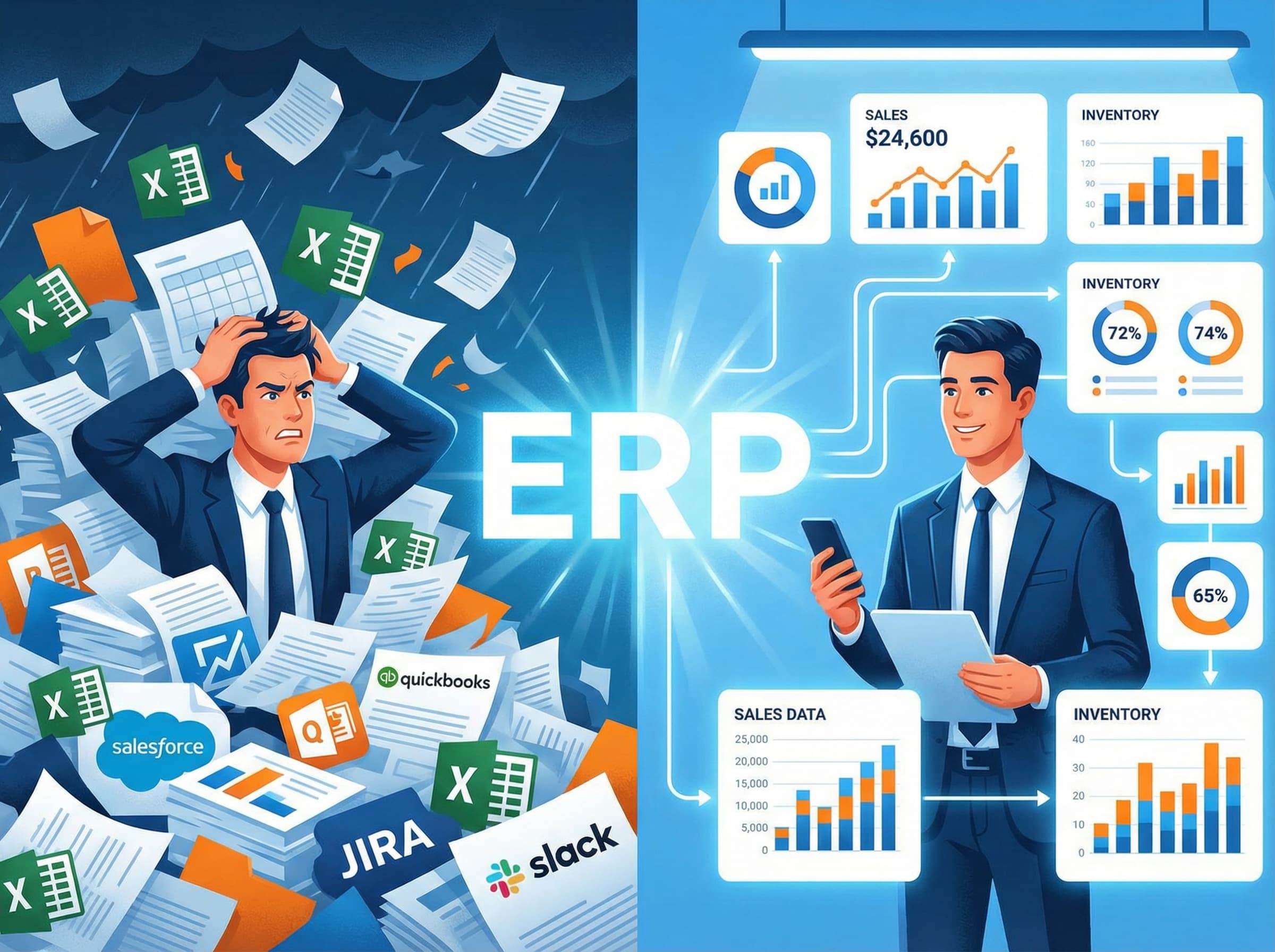
When small businesses start growing, managing with Excel or separate software may work initially. But as teams expand and transactions increase, those systems become the source of problems — data inconsistencies, duplicated work, and slower decision-making.
ERP (Enterprise Resource Planning) integrates every department into a single platform — accounting, procurement, inventory, and HR. Let's look at the key signs your business needs one.
Sign 1: Data Is Scattered — No Single Source of Truth
If Sales has their own spreadsheet, Accounting has another version, and Warehouse uses a separate system — that's the first sign. When numbers from different sources don't match, the first 30 minutes of every meeting gets wasted reconciling data instead of solving actual problems.
With ERP: Every department sees the same data in real-time.
Sign 2: Month-End Close Takes More Than a Week
A 1-2 week closing process clearly indicates your accounting is still heavily manual. Teams must pull data from multiple systems and reconcile by hand — high human error risk with every cycle.
An Adowbig client in the construction industry reduced their month-end close from 2 weeks to 2 days after implementing Odoo ERP.
With ERP: Automated accounting, real-time P&L every day.
Sign 3: You Don't Know Your Actual Stock Level Right Now
"System says 100 units, but physical count shows 73" — if this sounds familiar, your inventory management needs fixing urgently. Non-real-time stock data causes Sales to oversell and run out of stock without warning.
With ERP: Inventory updates instantly with every stock movement.
Sign 4: Can't See Profitability Per Product or Project
If answering "How profitable is Product A really?" takes 3 days to answer — that's a problem. Scalable businesses make fast decisions based on real data, not last week's numbers.
With ERP: Dashboard shows P&L by product/project instantly.
Sign 5: New Employees Take 2-3 Months to Learn the System
When processes live in experienced employees' heads rather than a system, onboarding is slow and risky. If key people leave, the knowledge leaves too.
With ERP: Standard processes are in the system. New employee onboarding is faster and more consistent.
Summary: Is ERP Worth It?
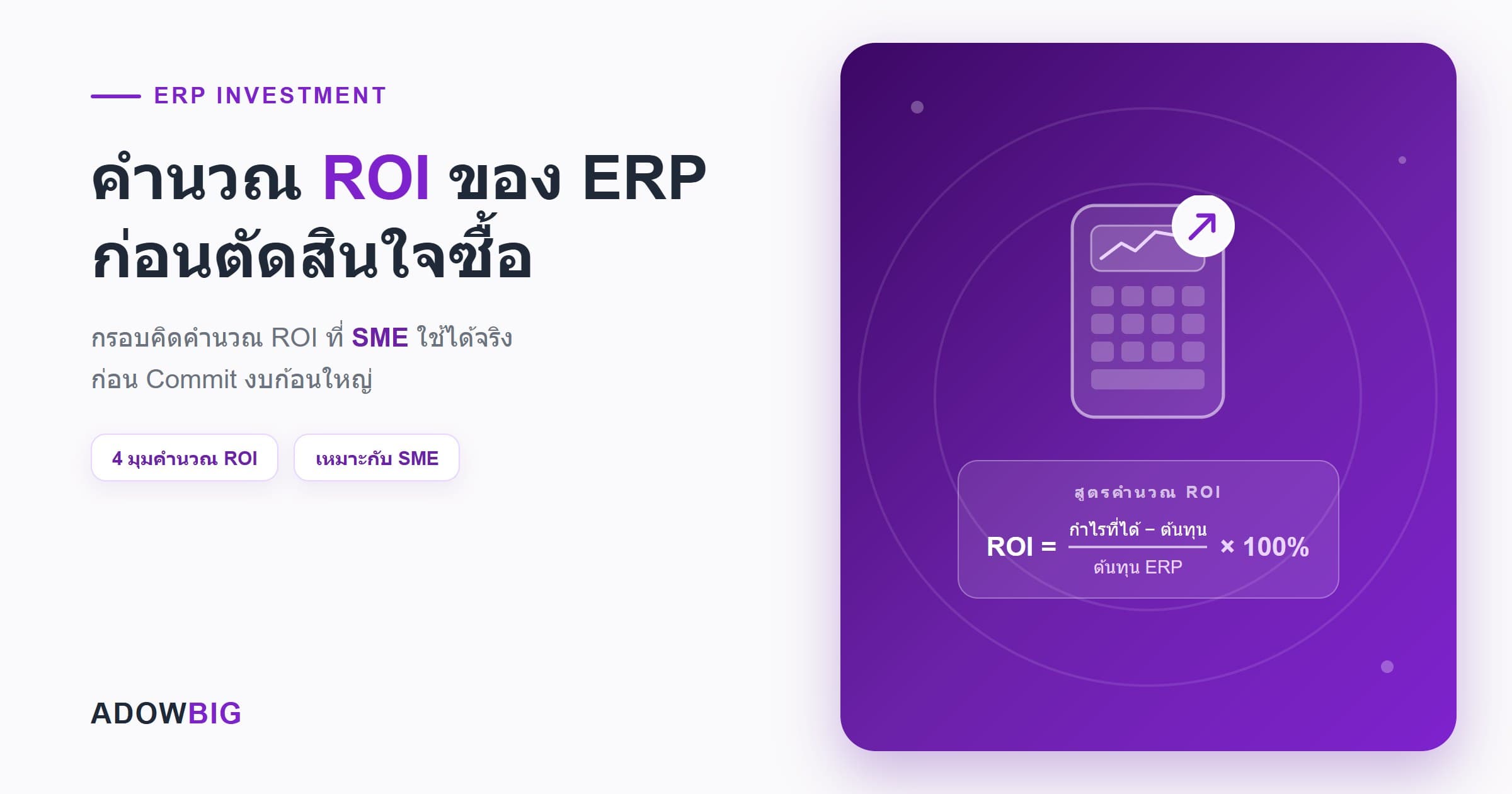
ERP is not an expense — it's an investment. The clearest ROI comes from time saved on manual processes and better decisions from accurate data.
Most businesses with 20+ employees and more than 500 monthly transactions typically see ROI within the first 12-18 months.
Want to know if your business is ready for ERP? Consult Adowbig for free — we assess your readiness and recommend the right path at no cost.