ถ้าปี 2023 คือปีที่คนรู้จัก ChatGPT และปี 2024–2025 คือปีที่ AI Chatbot กลายเป็น mainstream — ปี 2026 คือปีของ AI Agent
แต่สิ่งที่หลายคนยังสับสนคือ: "AI Agent" กับ "AI Chatbot" ต่างกันยังไง? และธุรกิจ SME ไทยควรสนใจตอนนี้หรือยัง?
AI Agent คืออะไร?
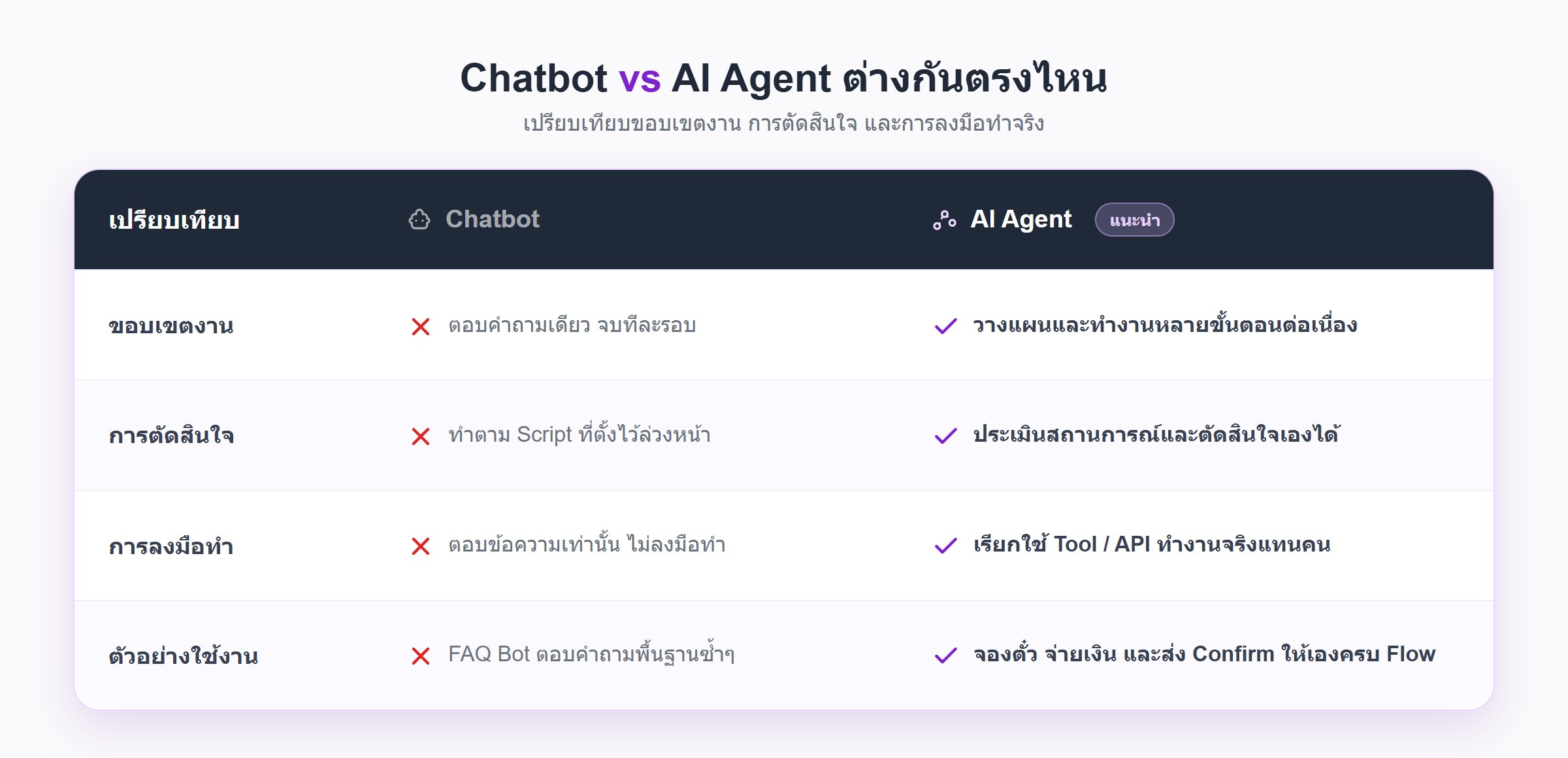 AI Agent คือระบบ AI ที่สามารถ:
- รับเป้าหมาย (ไม่ใช่แค่คำถาม)
- วางแผนขั้นตอน เพื่อบรรลุเป้าหมายนั้น
- ใช้เครื่องมือต่างๆ เช่น เรียก API, ค้นหาข้อมูล, เขียนโค้ด
- ลงมือทำ แต่ละขั้นตอนโดยอัตโนมัติ
- ตรวจสอบผล แล้วปรับแผนถ้าจำเป็น
เปรียบเทียบง่ายๆ:
- Chatbot = พนักงานที่รับโทรศัพท์และตอบคำถาม
- AI Agent = ผู้ช่วยที่รับ brief แล้วไปทำงานจนเสร็จและ report กลับมา
ตัวอย่าง AI Agent ในธุรกิจจริง
1. Report Generation Agent
Goal: "สร้างรายงานยอดขายประจำสัปดาห์"
- ดึงข้อมูลจาก ERP
- วิเคราะห์เปรียบเทียบกับสัปดาห์ก่อน
- สร้างกราฟและสรุปเป็น PDF
- ส่ง email ให้ผู้บริหารทุกเย็นวันศุกร์
ผลลัพธ์: ประหยัดเวลา analyst 3–5 ชั่วโมงต่อสัปดาห์
2. Lead Research Agent
Goal: "ค้นหาข้อมูลบริษัท ABC ก่อนนัด meeting"
- ค้นหาข่าวล่าสุดของบริษัท
- ดึงข้อมูลจาก LinkedIn
- ตรวจสอบ website และ job posting
- สรุป context ที่เกี่ยวข้องส่งให้ sales team
ผลลัพธ์: ประหยัดเวลา pre-sales research 1–2 ชั่วโมงต่อ meeting
3. Customer Support Escalation Agent
Goal: รับ complaint จากลูกค้า จัดการตามระดับความรุนแรง
- อ่านและวิเคราะห์ complaint
- ถ้า routine: ตอบอัตโนมัติพร้อมแนวทางแก้ไข
- ถ้า urgent: สร้าง ticket และ assign ให้ทีมที่ถูกต้องทันที
- ส่ง status update ให้ลูกค้าตลอด
ผลลัพธ์: Response time ลดจาก 4 ชม. เหลือ < 30 นาที
AI Agent Architecture: ทำงานอย่างไร?
[Goal Input]
     ↓
[Planning Module] — แยก goal เป็น sub-tasks
     ↓
[Tool Selection] — เลือก tools ที่ต้องใช้
     ↓
[Execution] — รัน tools ทีละตัว (API, Search, Code)
     ↓
[Observation] — ตรวจผลลัพธ์จาก tools
     ↓
[Reasoning] — ตัดสินใจขั้นต่อไปหรือ finalize
     ↓
[Output]
Framework ยอดนิยมสำหรับสร้าง AI Agent ปี 2026
| Framework | ระดับ | เหมาะกับ |
|---|---|---|
| n8n | ไม่ต้องเขียน code มาก | SME, automation workflow |
| Make.com | Low-code | ทีมที่ไม่ใช่ dev |
| LangChain | Code-first | Developer ที่ต้องการ control สูง |
| AutoGen | Advanced | Multi-agent systems |
| CrewAI | Advanced | Team of agents ทำงานร่วมกัน |
3 Use Case ที่ SME ไทยควรเริ่มก่อน
Use Case 1: Email Triage Agent
Agent ที่คอย monitor inbox, categorize email, และ draft คำตอบเบื้องต้นสำหรับ inquiry ทั่วไป — ลด workload ทีมได้ทันที
Use Case 2: Document Summarization Agent
ส่ง contract, report, หรือ meeting notes ให้ Agent สรุปเป็น bullet points และ highlight จุดสำคัญ — ประหยัดเวลาอ่านได้ 60–80%
Use Case 3: Inventory Monitoring Agent
Agent ที่ตรวจ stock ทุกวัน ถ้าสินค้าใกล้หมด → แจ้งเตือน → สร้าง purchase order draft → รอ approval จาก manager
วิธีเริ่มต้นแบบ Low-risk
- เลือก 1 use case ที่เล็กที่สุด — งานที่ทำซ้ำ, ใช้เวลา, ผลกระทบถ้าผิดน้อย
- เริ่มแบบ Human-in-the-loop — ให้ Agent ทำแล้วมนุษย์ approve ก่อนทุกครั้ง
- วัดผล 4–8 สัปดาห์ — ดูว่าประหยัดเวลาได้จริงไหม คุณภาพดีพอไหม
- ค่อยๆ เพิ่ม autonomy — เมื่อมั่นใจในความถูกต้องแล้วค่อย reduce human review
- ขยาย use case — เพิ่ม use case ถัดไปทีละอย่าง
สรุป
AI Agent ไม่ใช่ของอนาคตอีกต่อไป — มันพร้อมใช้งานได้จริงสำหรับธุรกิจทุกขนาดในปี 2026 กุญแจสำหรับ SME ไทยคือเริ่มจาก use case เล็กๆ ที่เห็นผลเร็ว แล้ว scale ขึ้นเมื่อมั่นใจ
Adowbig ช่วย design, พัฒนา, และ integrate AI Agent เข้ากับระบบที่ธุรกิจคุณใช้อยู่แล้ว ไม่ว่าจะเป็น ERP, CRM, หรือระบบ custom — ปรึกษาฟรีเพื่อดู ROI ที่คุณจะได้