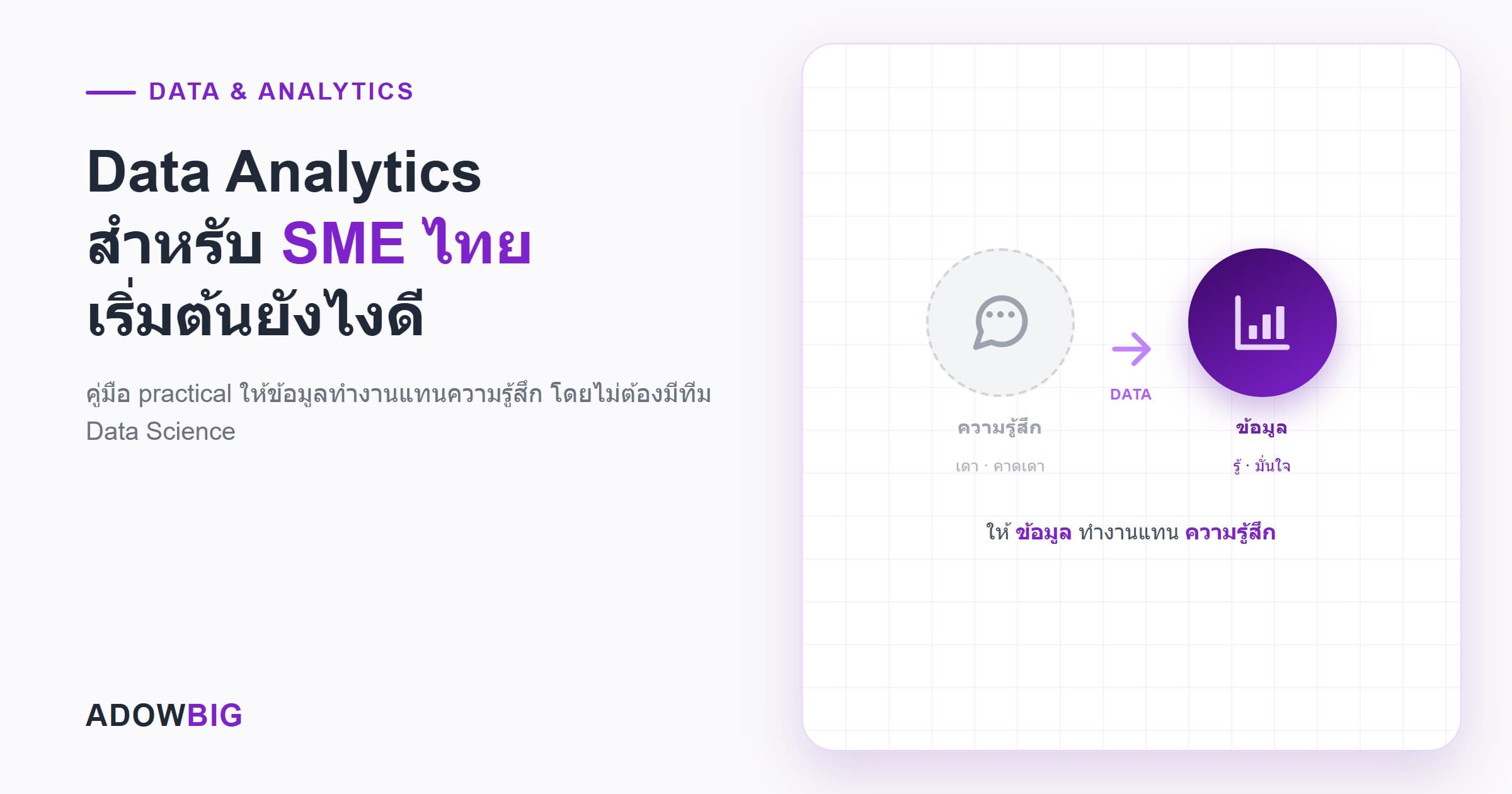
"We have a lot of data but we do not know what to do with it." This is one of the most common things we hear from Thai SME executives.
The real problem is not a lack of data. It is a lack of a framework for turning that data into actionable insight. This article gives you that framework.
What is Data Analytics in Practice?
For SME purposes, data analytics is not AI, not machine learning, not a ten-person data science team. It is simply asking the right questions of the data you already have in order to make better decisions.
Questions your data should be able to answer:
- Which customer segments generate the most revenue while requiring the least service time?
- Which products sell well but have low margins?
- Which months see the tightest cash flow, and what drives that?
- Which sales team members have the highest conversion rates, and why?
4 Levels of Data Analytics
| Level | Question Answered | Tools |
|---|---|---|
| Descriptive | What happened? | Reports, dashboards |
| Diagnostic | Why did it happen? | Drill-down, comparisons |
| Predictive | What will happen next? | Trend analysis, forecasting |
| Prescriptive | What should we do? | Simulations, AI recommendations |
Most SMEs should start at descriptive and diagnostic, which do not require sophisticated tools.
How to Start Practically
Step 1: Define business questions first. Do not start with "we want to do analytics." Start with "what do we want to know?" Write five to ten questions where knowing the answer would genuinely improve your decisions.
Good questions: "How often do repeat customers buy?" "Which campaigns produced leads that actually converted?" "Why does branch A have higher cost per unit than branch B?"
Step 2: Audit your current data. Map where the data needed to answer each question lives — Excel files, an ERP system, or just someone's head (which means you need to start capturing it first).
Step 3: Choose tools based on your readiness. Starting out with no IT resources: Excel or Google Sheets are sufficient for descriptive analytics at small SME scale. Intermediate level: Power BI or Looker Studio for visual dashboards connecting multiple data sources. Advanced: custom-built dashboards when you need real-time data, complex calculations, or embedded analytics within your applications.
Step 4: Pilot with one KPI. Do not try to analyze everything at once. Pick the single most important KPI, do it well, then expand.
Common Mistakes Thai SMEs Make
Starting too big. Building a data warehouse before knowing what questions you want to answer wastes money and time — and often produces nothing anyone actually uses.
Ignoring data quality. A beautiful dashboard is nearly worthless if the input data is unreliable. Invest in data quality before you invest in visualization.
Analysis paralysis. Waiting for perfect data before acting. Data that is 80% accurate and immediately available beats 100% accurate data that arrives six months later.
No action loop. Running analysis and then nobody acts on the insight. Analytics creates value only when it changes decisions. Build the habit of reviewing analytics output and explicitly deciding what to do differently.
Quick Wins: The Fastest ROI for Thai SMEs
From real project experience, these use cases deliver the fastest returns:
- Customer segmentation — group customers by value, then serve each group differently
- Product performance by margin — know which products to promote and which to cut
- Sales funnel analysis — find where conversion drops off most and fix it first
- Cash flow forecasting — build a simple 3-month cash model from historical patterns
The Bottom Line
Data analytics is not complicated if you start in the right place. Begin with clear business questions, locate your data, match the tool to your readiness level, and focus on results you can act on immediately.
The Adowbig team is happy to audit your data landscape and identify the most valuable starting points. Reach out for a free consultation.