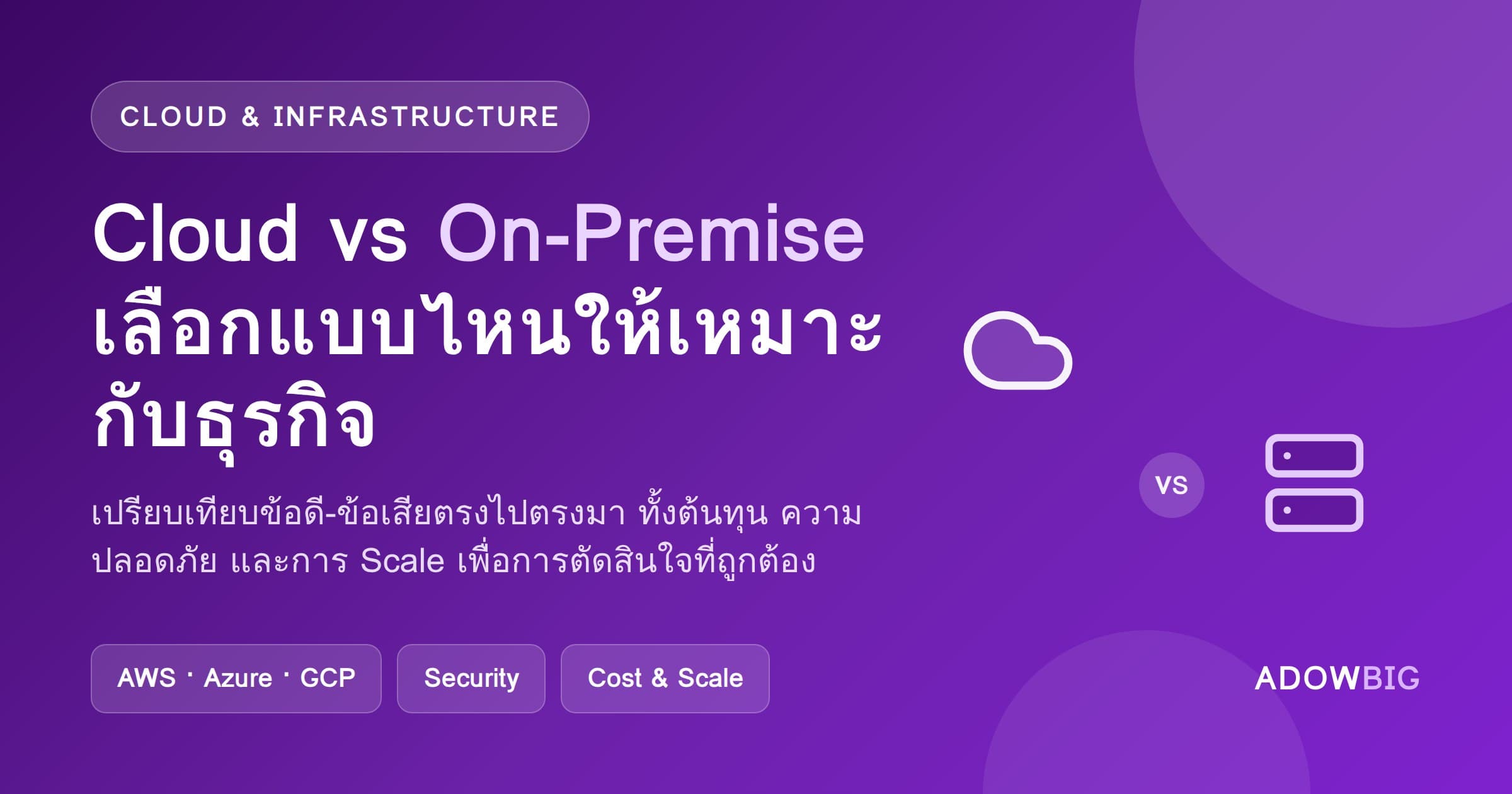
What Are Cloud and On-Premise?
On-Premise means installing software and storing data on servers that your company buys and manages. Cloud means using infrastructure from providers like AWS, Microsoft Azure, or Google Cloud, paying based on usage.
Both have their place depending on business size, budget, and security requirements.
Cloud Advantages
1. Fast to Start — No Hardware Purchase
No need to wait for server procurement or Data Center setup. Create an account today and the system is ready within hours.
2. Scale Up or Down on Demand
Add resources instantly during peak seasons, then reduce when done. No idle hardware costs.
3. CAPEX to OPEX
No large upfront investment. Pay monthly based on actual usage.
4. High Availability by Default
Major cloud providers offer 99.9%+ Uptime SLAs with automatic backup.
On-Premise Advantages
1. 100% Data Control
Data stays on your company's servers without passing through external providers. Ideal for businesses with highly sensitive data — hospitals, financial institutions.
2. Lower Long-Term Cost in Some Cases
For large systems with consistently high resource usage, monthly cloud costs can exceed server purchase costs over 3-5 years.
3. Works Without Internet Dependency
Factory systems or locations with unstable Internet make On-Premise safer.
4. Compliance Requirements
Some regulations require data to stay within the country. On-Premise or Cloud with a local region can satisfy this.
Comparison Table
| Factor | Cloud | On-Premise |
|---|---|---|
| Upfront Cost | Low | High |
| Long-term Cost | Variable | Fixed |
| Flexibility | Very High | Limited |
| Data Control | Medium | Maximum |
| Maintenance | Provider handles | IT team handles |
| Time to Start | Hours | Weeks–Months |
What Does Adowbig Recommend?
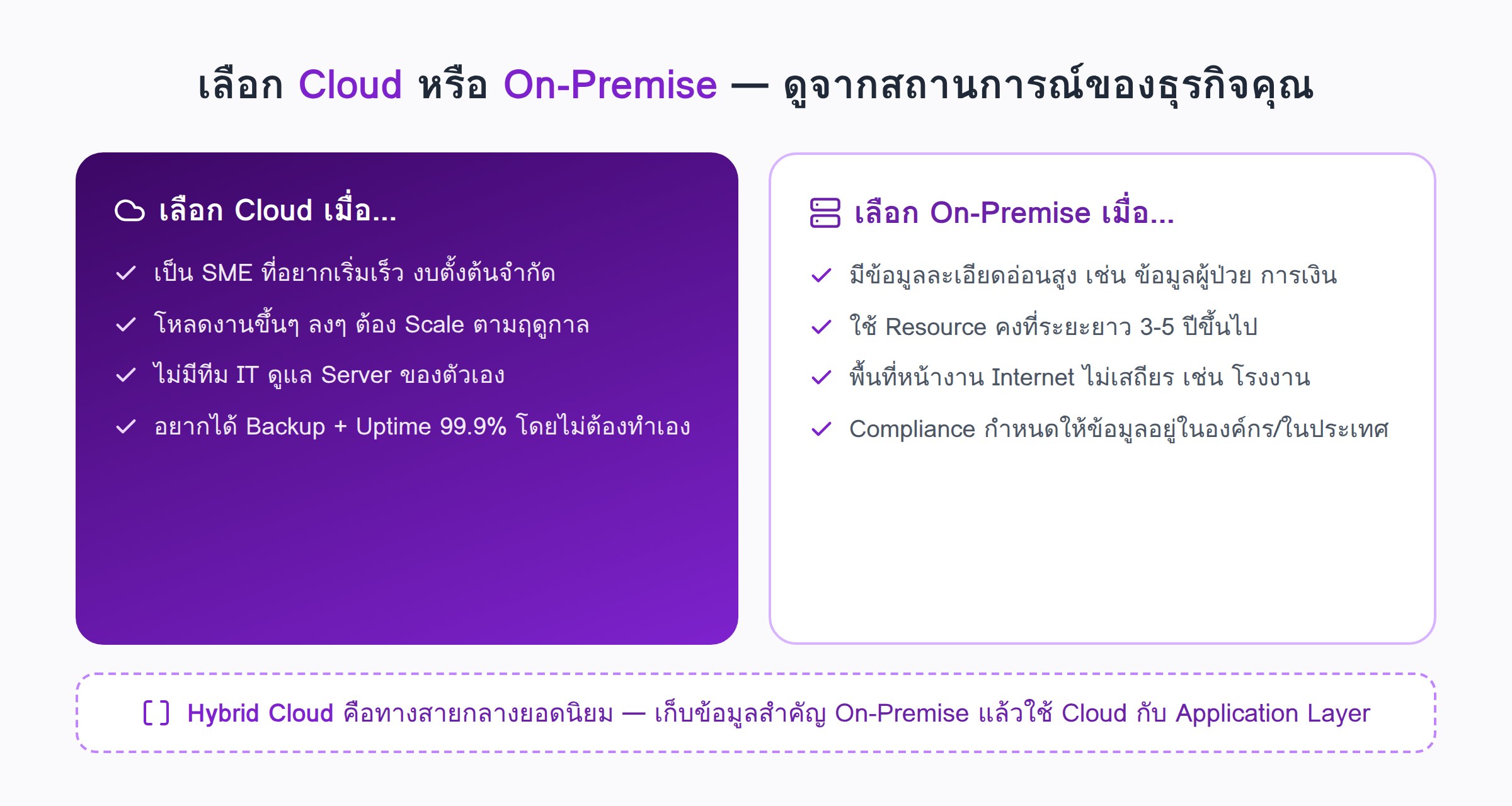
It depends on 3 factors:
- Size and Budget — Most SMEs benefit more from Cloud in the first 3 years
- Sensitive Data — Medical or financial data warrants Hybrid Cloud consideration
- IT Team — Without an internal IT team, Cloud reduces Operational Overhead significantly
Hybrid Cloud is the most popular approach — keep critical data On-Premise while using Cloud for the Application Layer.
Need help planning your infrastructure? Consult Adowbig for free