"Digital transformation" is everywhere in business conversations, but many Thai SMEs are still unclear: what does it actually mean, and does it apply to them?
The short answer: digital transformation is using digital technology to fundamentally change how your business operates — not just buying new software, but changing processes, culture, and business models.
Digital Transformation vs. Digitization vs. Digitalization
These three terms are often confused:
| Term | Meaning | Example |
|---|---|---|
| Digitization | Converting analog to digital | Scanning paper documents to PDF |
| Digitalization | Using digital to improve a process | Using Excel instead of a paper ledger |
| Digital Transformation | Using digital to change the business model | From physical retail to e-commerce selling direct nationwide |
4 Domains of Digital Transformation
1. Customer Experience
- Customers can order, track shipments, and contact support through digital channels
- Personalization: knowing what each customer likes and has bought before
- Omnichannel: seamless experience across online and offline
2. Operational Efficiency
- Automating repetitive manual tasks
- Real-time visibility into inventory, production, and delivery
- Eliminating data entry errors
3. Business Model Innovation
- Adding new digital revenue streams
- Data-driven decisions instead of gut instinct
- Subscription models instead of one-time purchases
4. People & Culture
- Upskilling employees to use digital tools
- A culture welcoming change
- Remote collaboration capability
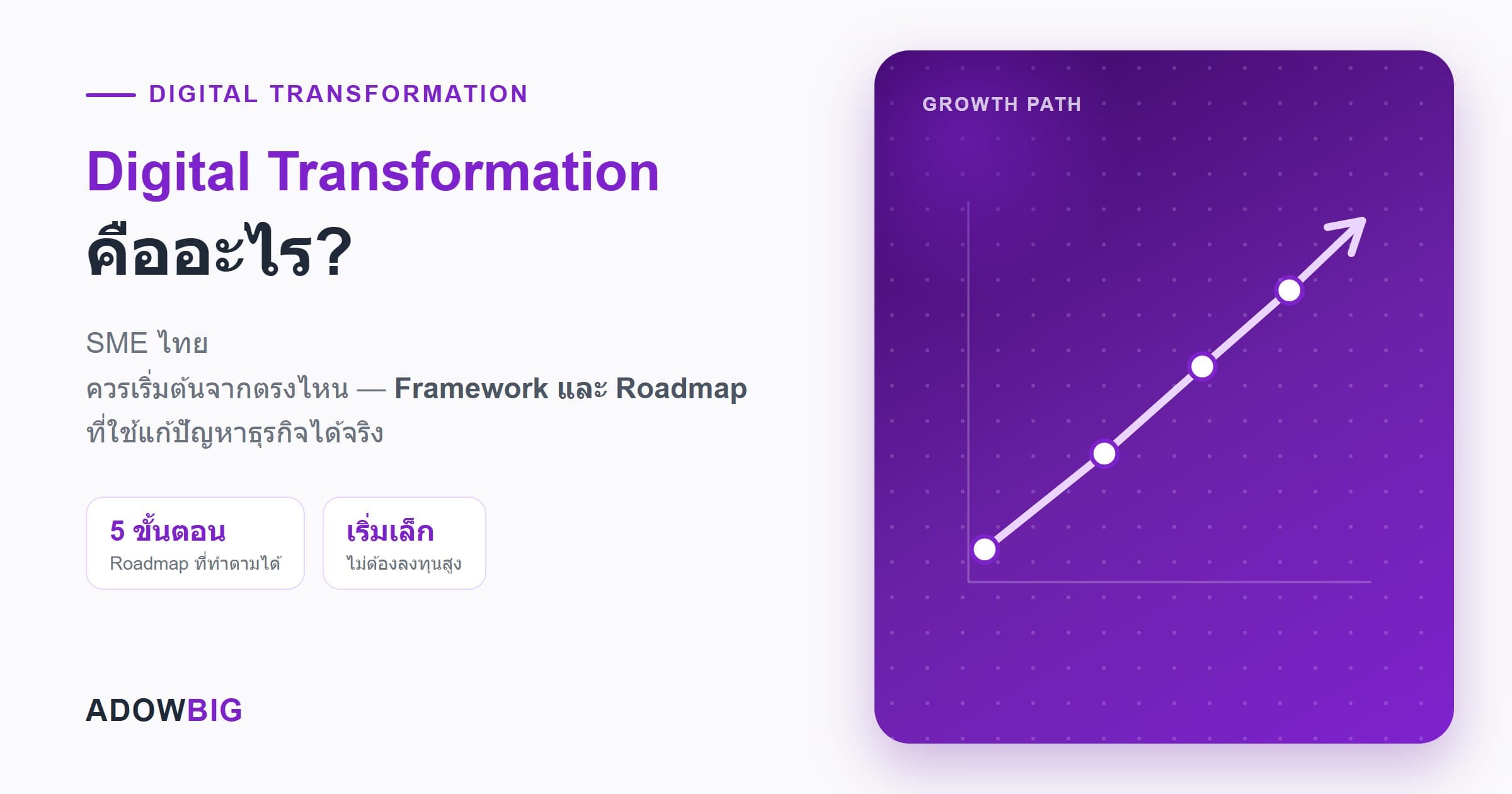
A Roadmap for Thai SMEs
Phase 1: Foundation (Months 1–3)
Essential groundwork before everything else:
- Cloud migration — move critical data from local PCs to cloud storage (Google Drive, OneDrive)
- Digital finance — use cloud accounting software instead of Excel
- Business communication — use Slack, Teams, or LINE Official instead of isolated phone calls
Cost: Mostly monthly SaaS subscriptions — a few thousand baht
Phase 2: Process Digitalization (Months 4–9)
- Simple CRM — track leads, customers, and sales pipeline (start with HubSpot Free or a simple custom CRM)
- Inventory management — real-time stock system
- E-commerce / online channels — open Shopee, LINE Shopping, or your own website
- Small automations — like auto-emailing customers when a new order is placed
Phase 3: Advanced Transformation (Month 10+)
- Custom software — when off-the-shelf no longer fits
- Data analytics — use data to decide, knowing which products have the best margin
- AI integration — chatbots, demand forecasting, personalization
- ERP — for businesses complex enough and at scale
Common Mistakes to Avoid
1. Starting from technology, not from problems
The right question is: "What problems do we need to solve?" — not "How should we use AI?"
2. Changing everything at once
Choose 1–2 processes with the highest impact first, then scale.
3. Forgetting change management
Technology change is easy — people change is hard. Invest in training and communication.
4. Not measuring ROI
Every digital initiative needs clear metrics, e.g., reducing processing time from 2 hours to 15 minutes.
A Framework for Deciding Where to Start
Score each process 1–5 on three dimensions:
- Impact — how much better would the business be if this were digitalized?
- Feasibility — how achievable is it with current budget and team?
- Urgency — what happens if we don't do this?
Start with the process scoring highest on Impact + Feasibility.
Summary
Digital transformation for Thai SMEs doesn't have to be grand or expensive, but it must start with:
- Real problems, not trends
- Step by step, not a big bang
- Measuring results at every stage before investing more
- People are as important as technology — never neglect change management
Businesses that start today will have a competitive advantage over those waiting for the "right moment" — which rarely comes.
Want a digital transformation roadmap tailored to your business? Consult with the Adowbig team for free.