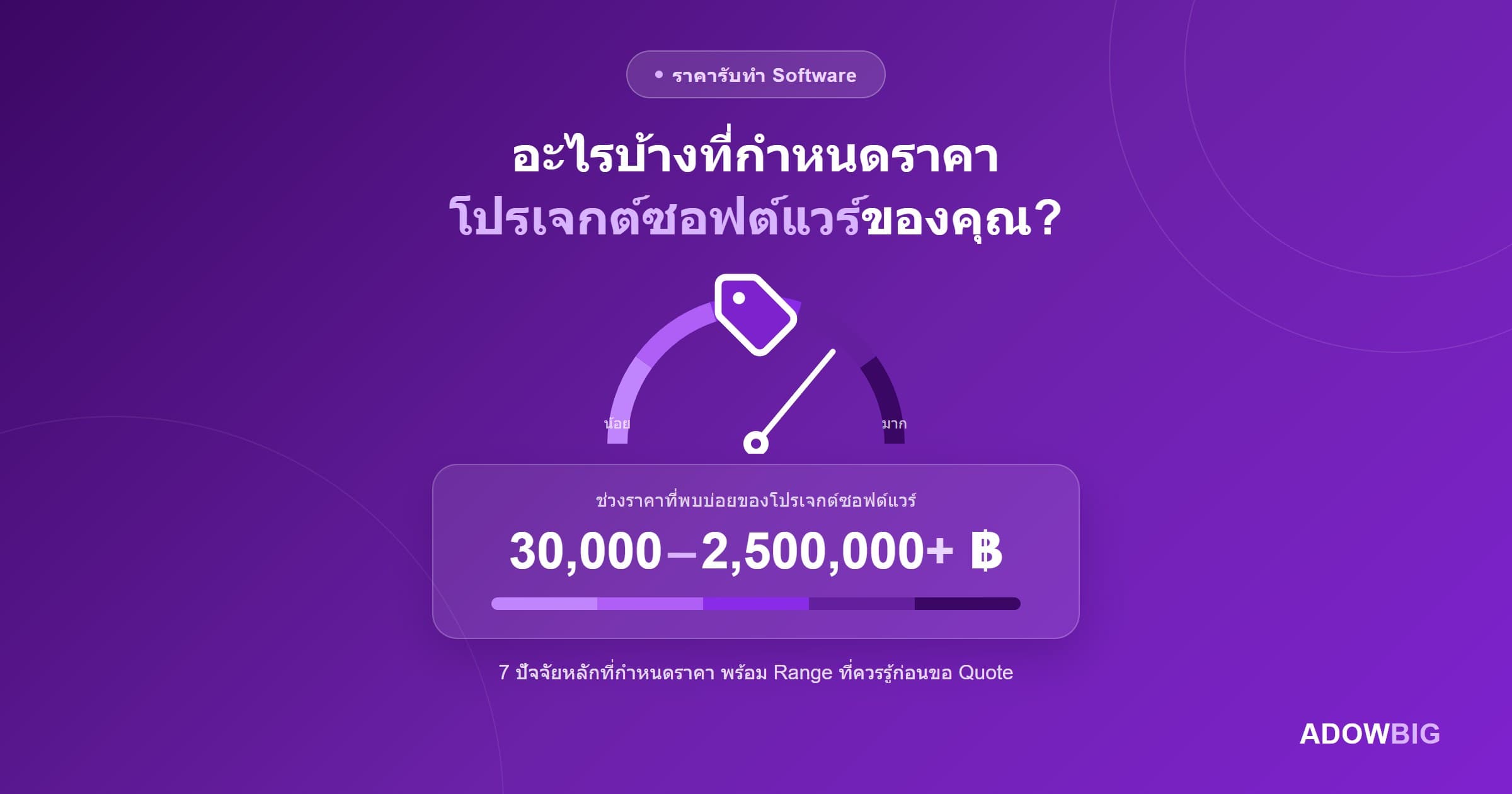
"ทำ Software ราคาเท่าไหร่?" เป็นคำถามที่ไม่มีคำตอบแบบตัวเลขเดียว เพราะโปรเจกต์ที่ดูเหมือนกันอาจราคาต่างกัน 10 เท่า ขึ้นอยู่กับปัจจัยหลายอย่าง
บทความนี้จะอธิบาย 7 ปัจจัยหลักที่กำหนดราคา Software และให้ Range ที่ควรรู้ก่อนขอ Quote
ทำไมราคา Software ถึงผันแปรมากขนาดนี้?
Software ไม่เหมือนสินค้าที่มีต้นทุนวัตถุดิบชัดเจน ราคาขึ้นอยู่กับ เวลาที่ใช้ และ ทักษะที่ต้องการ — ทั้งสองอย่างนี้ขึ้นอยู่กับ Complexity ของโปรเจกต์
ปัจจัยที่ 1: Scope และความซับซ้อนของ Feature
 นี่คือตัวแปรที่มีผลมากที่สุด ยิ่ง Feature มาก ยิ่งซับซ้อน ยิ่งแพง
ตัวอย่างเปรียบเทียบ:
| โปรเจกต์ | Feature หลัก | Range ราคา (THB) |
|---|---|---|
| เว็บไซต์บริษัท + CMS | 5–8 หน้า, Blog, Contact | 30,000–80,000 |
| ระบบ Booking ร้านค้า | Calendar, Payment, Notification | 150,000–350,000 |
| CRM ขนาดกลาง | Lead, Pipeline, Report, Email | 400,000–900,000 |
| ERP สำหรับ SME | Inventory, HR, Finance, Purchase | 800,000–2,500,000+ |
หมายเหตุ: Range เป็นค่าประมาณ ขึ้นอยู่กับ Vendor และ Tech Stack
ปัจจัยที่ 2: จำนวน Integrations และ Third-party APIs
การเชื่อมต่อกับระบบภายนอกเพิ่มต้นทุนอย่างมีนัยสำคัญ เพราะต้องใช้เวลาพัฒนา, ทดสอบ และรับมือกับ Edge Cases
ตัวอย่าง API ที่พบบ่อยและผลต่อราคา:
- Payment Gateway (Omise, PromptPay, Stripe) → +30,000–80,000 บาท
- LINE Messaging API → +20,000–50,000 บาท
- Google Maps / Location Services → +15,000–40,000 บาท
- ERP/Accounting เดิม → +50,000–200,000 บาท (ขึ้นกับความซับซ้อน)
- รัฐบาล/Regulatory API → +50,000–150,000 บาท
ปัจจัยที่ 3: Platform ที่ต้องการ
| Platform | ผลต่อราคา |
|---|---|
| Web Application เดียว | Baseline |
| Web + Mobile App (iOS หรือ Android) | +40–70% |
| Web + iOS + Android | +70–120% |
| Cross-platform Mobile (Flutter/React Native) | +40–60% (ถูกกว่า Native) |
คำแนะนำ: เริ่มจาก Web Application ก่อน ถ้า User ส่วนใหญ่ใช้บนมือถือให้ทำ Progressive Web App (PWA) ก่อนแทนที่จะทำ Native App ทันที
ปัจจัยที่ 4: ทีมที่พัฒนา (Location และ Seniority)
| ทีม | Rate เฉลี่ยต่อชั่วโมง |
|---|---|
| Freelance Junior (ไทย) | 400–800 THB/hr |
| Freelance Senior (ไทย) | 800–2,000 THB/hr |
| Software House (ไทย) | 1,000–2,500 THB/hr |
| Software House (อินเดีย) | 500–1,500 THB/hr |
| Software House (ยุโรป/US) | 5,000–15,000 THB/hr |
Software House ไทยให้ Balance ระหว่างคุณภาพ, การสื่อสาร และต้นทุนที่ดีที่สุดสำหรับธุรกิจไทย
ปัจจัยที่ 5: Design Complexity
Design ที่ดีใช้เวลาและทักษะมาก
- Template-based Design (ปรับ Theme สำเร็จรูป) → ถูกที่สุด
- Custom Design จาก Wireframe → ปานกลาง
- Premium UX Research + Custom Design System → แพงที่สุด
Animation, Micro-interaction และ Custom Illustration เพิ่มต้นทุนอีก 20–40%
ปัจจัยที่ 6: Security และ Compliance Requirements
งานที่ต้องการ Security สูงหรือมี Regulatory ต้องการ Investment เพิ่ม:
- ระบบชำระเงิน → PCI-DSS Compliance
- ระบบสุขภาพ → Data Privacy (PDPA)
- ระบบการเงิน → ธปท. / SEC Compliance
- ระบบรัฐ → Government Security Standards
แต่ละ Compliance Level เพิ่มต้นทุน 15–40% ขึ้นกับ Scope
ปัจจัยที่ 7: Timeline — เร่งด่วนมีค่าใช้จ่าย
ถ้าต้องการ Deliver เร็วกว่า Timeline ปกติ Software House บางเจ้าจะ:
- เพิ่มทีม (เพิ่มต้นทุน)
- ทำงาน Overtime (อาจมี Premium)
- ลด Scope เพื่อให้ทัน Timeline
กฎทั่วไป: เร่งกำหนดเวลา 50% มักเพิ่มต้นทุน 30–50%
Cost ที่คนมักลืมนับ
นอกจากค่าพัฒนาหลัก ยังมี:
- Hosting และ Infrastructure — Cloud Server, Database, CDN: 2,000–50,000 บาท/เดือน
- Domain และ SSL Certificate — 500–3,000 บาท/ปี
- Third-party Service Subscription — ค่า SMS, Email Service, Maps API
- Maintenance รายปี — 15–25% ของค่าพัฒนา
- Training — สอน User/Admin: 5,000–30,000 บาท
วิธีควบคุมงบประมาณ
- ทำ MVP ก่อน — ตัด Feature ที่ไม่จำเป็นออก
- Phase การพัฒนา — แบ่งเป็น Phase ไม่ต้องจ่ายทั้งหมดพร้อมกัน
- เลือก Template UI แทน Custom Design สำหรับ Phase แรก
- ใช้ Cloud Service แทนพัฒนาเอง เช่น Auth, Email, Storage
- กำหนด Scope อย่างเข้มงวด — "Scope Creep" คือสาเหตุหลักที่โปรเจกต์บวม
สรุป
ราคา Software กำหนดโดย Scope + Complexity + Timeline + Team Quality ไม่ใช่แค่จำนวนหน้าหรือจำนวน Feature
ก่อนขอ Quote ให้เตรียม:
- รายการ Feature ที่ต้องการ (Must Have, Should Have, Nice to Have)
- Timeline ที่ต้องการ Go-Live
- Range งบประมาณคร่าวๆ
- Platform ที่ต้องการ
ข้อมูลเหล่านี้จะช่วยให้คุณได้ Quote ที่แม่นยำและเปรียบเทียบได้จริง
ต้องการ Quote ที่โปร่งใสและ Scope ที่ชัดเจน? ติดต่อทีม Adowbig เพื่อนัด Discovery Session ฟรี