เมื่อนั่งคุยกับ Software House คุณมักได้ยินคำว่า "Agile" หรือ "Waterfall" แต่หลายคนไม่แน่ใจว่าสองคำนี้ต่างกันอย่างไร และมีผลต่อโปรเจกต์ของตัวเองยังไง
ความเข้าใจ Methodology ทั้งสองแบบจะช่วยให้คุณ Set Expectation ได้ถูกต้อง และเลือก Software House ที่ทำงานด้วยกันได้อย่างราบรื่น
Waterfall คืออะไร?
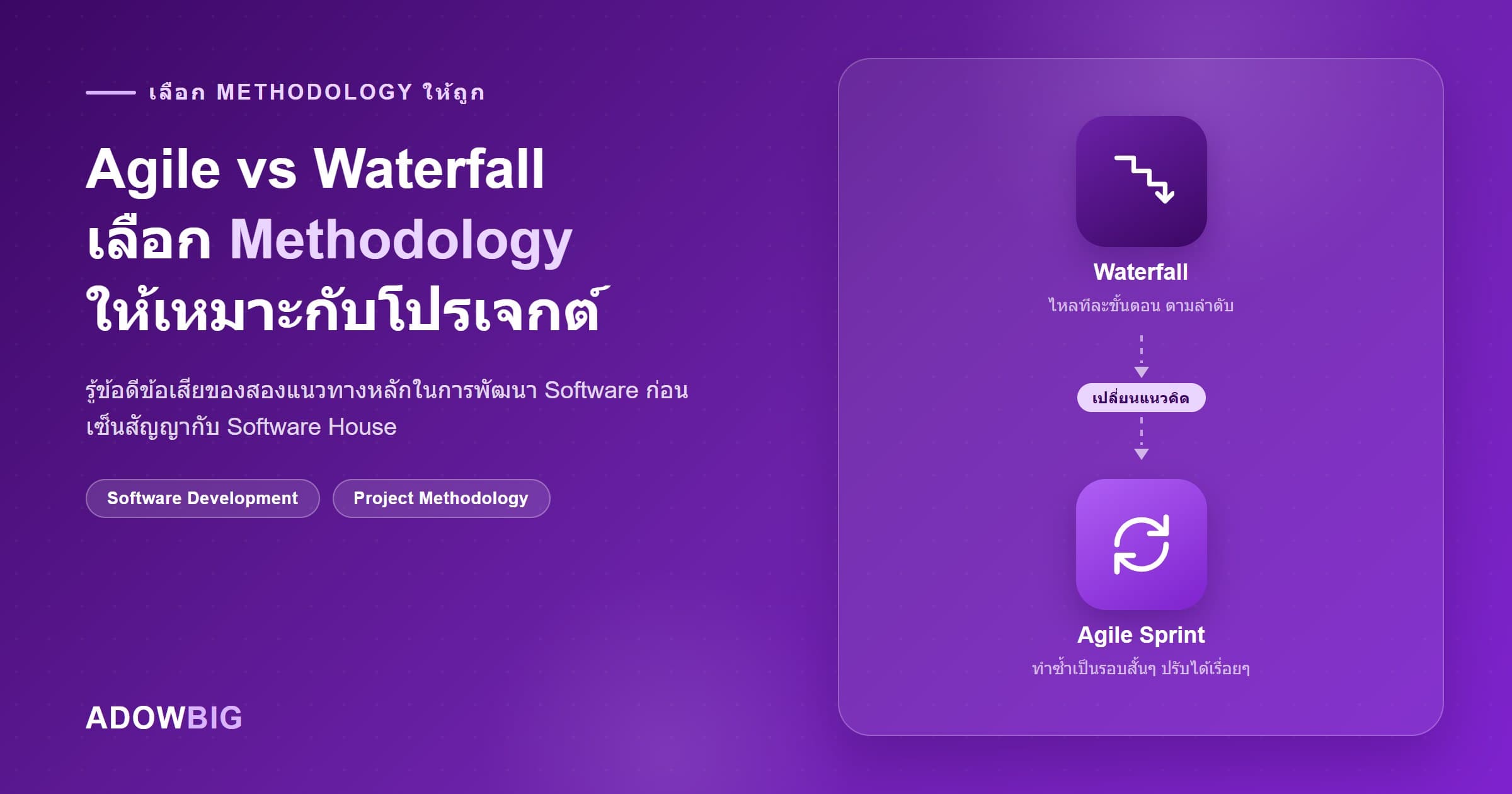
Waterfall เป็น Methodology แบบดั้งเดิม ที่แบ่งโปรเจกต์เป็น Phase ตายตัว ต่อเนื่องกัน เหมือนน้ำตกที่ไหลลงทางเดียว
Phase หลักของ Waterfall:
- Requirements — รวบรวม Requirement ทั้งหมดก่อน
- Design — ออกแบบระบบทั้งหมด
- Development — Code ทุก Feature
- Testing — ทดสอบครั้งเดียวหลัง Development เสร็จ
- Deployment — Deploy เมื่อผ่าน QA
- Maintenance — Support หลัง Go-Live
ลักษณะสำคัญ:
- ต้องรู้ Requirement ทั้งหมดตั้งแต่ต้น
- แทบไม่มีการเปลี่ยนแปลงกลางทาง
- ลูกค้าเห็น Product ครั้งแรกตอน Go-Live
Agile คืออะไร?
Agile เป็น Philosophy ของการพัฒนา Software ที่เน้นความยืดหยุ่น ความร่วมมือ และการ Deliver คุณค่าในช่วงเวลาสั้นๆ แบบ Iterative
หลักการสำคัญของ Agile (จาก Agile Manifesto 2001):
- Individual และ Interaction > Process และ Tools
- Working Software > Documentation ครบถ้วน
- Customer Collaboration > Contract Negotiation
- Responding to Change > Following a Plan
วิธีทำงานใน Agile (ตัวอย่างด้วย Scrum):
- แบ่งการพัฒนาเป็น Sprint (รอบ 2 สัปดาห์)
- แต่ละ Sprint ส่งมอบ Feature ที่ทดสอบได้จริง
- ลูกค้า Review และ Feedback ทุก Sprint
- ปรับ Priority ได้ระหว่างทาง
เปรียบเทียบตรงๆ
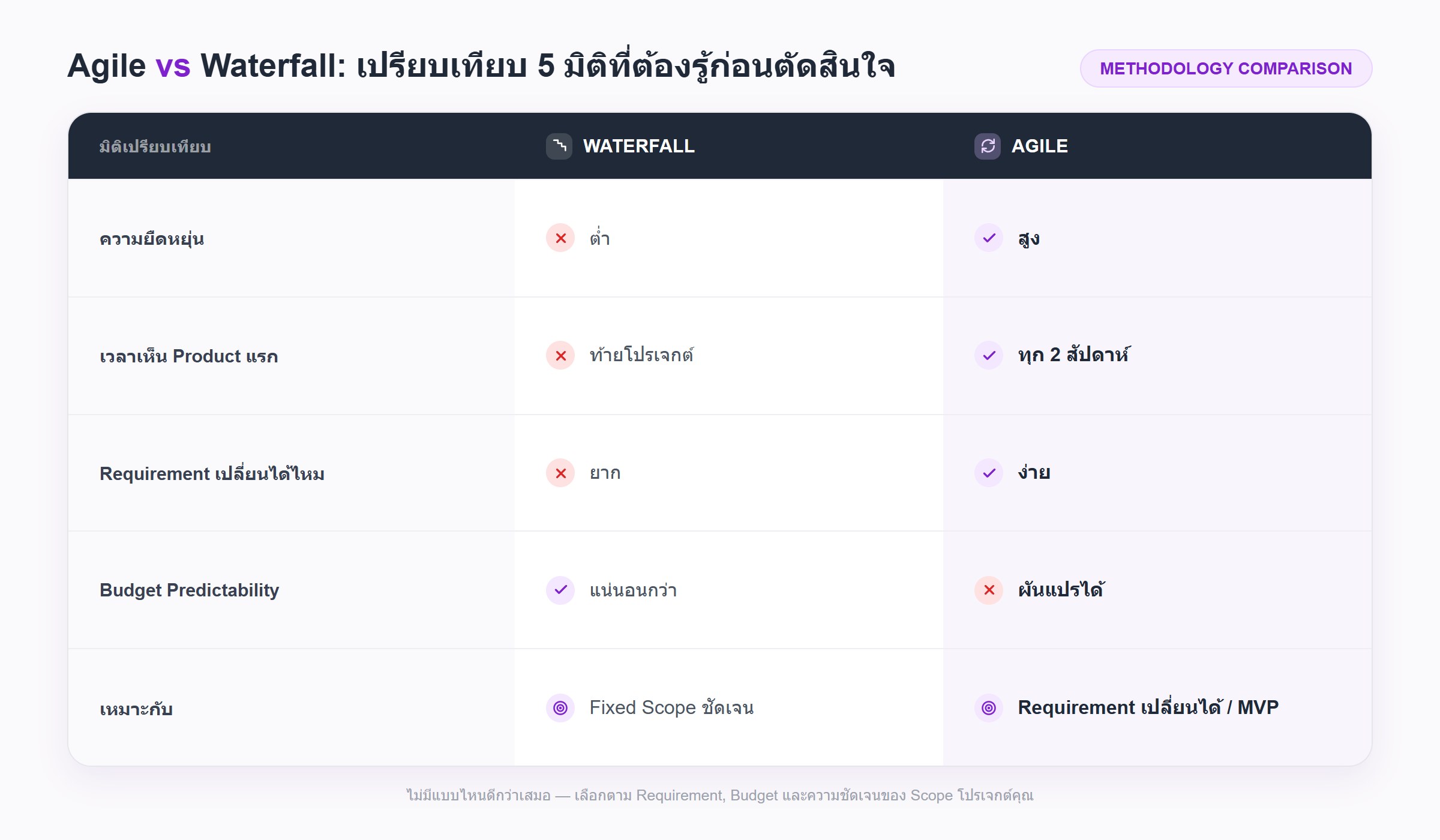
| ปัจจัย | Waterfall | Agile |
|---|---|---|
| ความยืดหยุ่น | ต่ำ | สูง |
| เวลาเห็น Product แรก | ท้ายโปรเจกต์ | ทุก 2 สัปดาห์ |
| Requirement เปลี่ยนได้ไหม | ยาก | ง่าย |
| การ Involve ของลูกค้า | ต้น + ท้าย | ตลอดโปรเจกต์ |
| Risk Management | Risk สูงถ้า Requirement ผิด | Risk กระจายทุก Sprint |
| Budget Predictability | แน่นอนกว่า | ผันแปรได้ |
| Documentation | ครบถ้วน | Minimal แต่พอเพียง |
| เหมาะกับ | Requirement ชัดเจน, Fixed Scope | Requirement เปลี่ยนได้, MVP |
เมื่อใดควรใช้ Waterfall
Waterfall ยังเหมาะกับบางสถานการณ์:
✅ Requirement ชัดเจนและไม่เปลี่ยน — เช่น ระบบ Migration ข้อมูล ✅ Regulatory Compliance — โปรเจกต์ที่ต้องมี Documentation ทุกขั้นตอน ✅ Fixed Budget และ Fixed Scope — เมื่อทุกอย่างตกลงกันชัดเจนตั้งแต่แรก ✅ ทีมงานแยกจากผู้จ้างโดยสิ้นเชิง — Outsource ในระดับ Government/Corporate ขนาดใหญ่
เมื่อใดควรใช้ Agile
Agile เหมาะกับส่วนใหญ่ของ Software Development สมัยใหม่:
✅ โปรเจกต์ที่ Requirement จะเปลี่ยนระหว่างทาง — ซึ่งเกิดขึ้นกับโปรเจกต์จริงเกือบทุกตัว ✅ Startup / MVP — ต้องการ Feedback จากผู้ใช้จริงเร็วที่สุด ✅ ลูกค้าพร้อม Involve ตลอดโปรเจกต์ — มีเวลา Review ทุก Sprint ✅ ต้องการ Go-Live บาง Feature ก่อน โดยไม่รอ Feature ทั้งหมด ✅ โปรเจกต์ที่ตลาดเปลี่ยนเร็ว — เช่น E-commerce, Mobile App, SaaS
Hybrid Approach — สิ่งที่ Software House จริงๆ ทำ
ในโลกจริง Software House ส่วนใหญ่ใช้ Hybrid Approach:
- Discovery Phase — ทำแบบ Waterfall (กำหนด Scope, Wireframe, Tech Stack ก่อน)
- Development — ทำแบบ Agile Sprint
- Go-Live — มี UAT แบบ Waterfall
- Post-Launch — Agile Backlog สำหรับ Feature ใหม่
วิธีนี้ให้ความชัดเจนด้าน Scope (และราคา) ในช่วงแรก พร้อมกับความยืดหยุ่นในช่วงพัฒนา
คำถามที่ควรถาม Software House
เมื่อคุณเลือก Software House ให้ถามว่า:
- "คุณใช้ Methodology อะไร? อธิบาย Process ให้ฟังหน่อย"
- "ลูกค้า Review งานบ่อยแค่ไหน?"
- "ถ้า Requirement เปลี่ยน จะมีกระบวนการ Change Request อย่างไร?"
- "มี Prototype หรือ Demo ก่อน Development เต็มไหม?"
คำตอบที่คลุมเครือหรือไม่มี Process ที่ชัดเจน เป็นสัญญาณเตือนที่ควรระวัง
สรุป
| ต้องการอะไร | เลือก |
|---|---|
| Requirement ชัด, ราคาตายตัว | Waterfall |
| Requirement เปลี่ยนได้, MVP | Agile |
| Balance ระหว่างสองอย่าง | Hybrid |
สำหรับ SME ไทยส่วนใหญ่ Agile หรือ Hybrid ให้ผลลัพธ์ที่ดีกว่า เพราะ Business Requirement เปลี่ยนแปลงตลอดเวลาในโลกจริง
ทีม Adowbig ใช้ Agile-based process พร้อม Sprint Review ทุก 2 สัปดาห์ เพื่อให้คุณ Involve กับงานได้ตลอดโปรเจกต์ ติดต่อเราเพื่อเรียนรู้เพิ่มเติม